
The Hunter's Moon 2026: Beneath the Last Golden Light
The Copper Compass-October 2026

There is something different about the October moon.
Perhaps it is the way the light settles across the fields, illuminating the remnants of a harvest already gathered. Or the way bare branches reach into an increasingly dark sky, their leaves surrendered to the wind. The air carries the unmistakable scent of autumn's departure, and the earth seems to draw inward, preparing for the long sleep ahead.
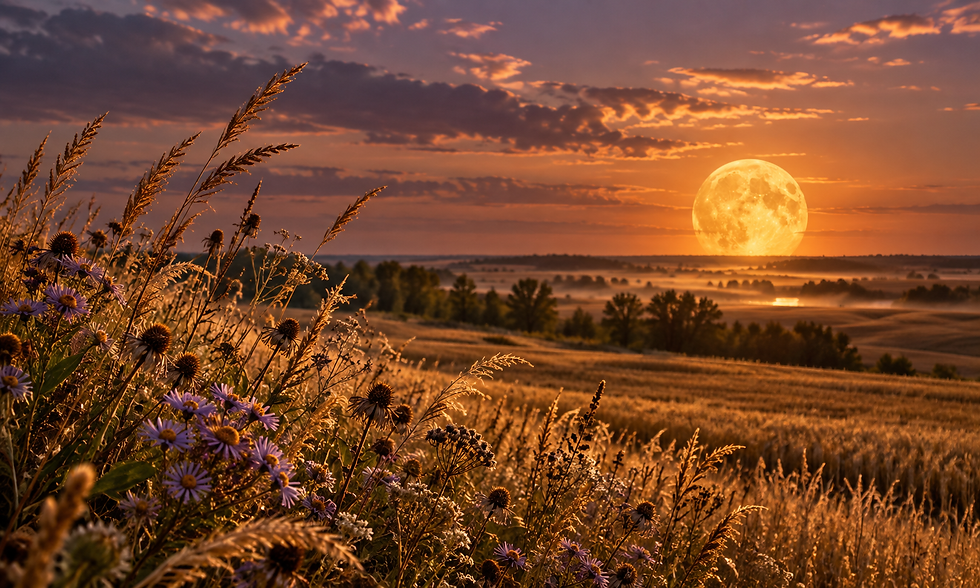
Then, rising above it all, comes the Hunter's Moon.
A luminous reminder that long before our calendars, grocery stores, and electric lights, the changing sky helped humanity measure the passage of time.
And this particular moon carried a message: winter was coming. There was work yet to be done.
When is the Hunter's Moon in 2026?
The Full Hunter's Moon reaches peak illumination on October 25, 2026, at approximately 2311 (11:11 pm) Central Daylight Time.
Although its astronimical peak is a precise moment, the moon will appear nearly full on the surrounding nights, offering several opportunities to appreciate its autumn brilliance.
Traditionally, the Hunter's Moon is the full moon following the Harvest Moon. While frequently associated with October, its position in the calendar can shift depending on the timing of the autumn equinox and preceding lunar cycles.
Its significance extends far beyond its place on the calendar.
When Moonlight Meant Survival
Imagine an autumn evening centuries ago.
The fields have been harvested. Grains have been stored, vegetables preserved, and provisions carefully counted. The days grow shorter and the first hard frosts announce that the season of abundance is drawing to a close.
For communities dependant upon the land, preparing for winter was not a quaint seasonal tradition. It was essential to survival.
The Hunter's Moon became associated with the period when hunting helped supplement winter food stores. In European traditions, its name reflected the practical importance of gathering meat after the harvest.
Moonlight provided additional visibility after sunset, and the full moons around the autumn equinox have a distinctive rising pattern that can extend useful evening illumination.
The sky itself was part of the seasonal rhythm.
The Hunter's Moon was not simply something beautiful to admire.
It was a reminder to prepare.
The Folklore of the Autumn Moon
Across generations, people have woven stories around the full moon, interpreting its light through the beliefs and experiences of their communities.
The Hunter's Moon is sometimes associated with names such as the Blood Moon or Sanguine Moon, references commonly linked to autumn hunting and the changing season.
Different cultures developed their own lunar names and traditions, shaped by local landscapes, wildlife, harvests and customs. These names were never universal, not did they all carry identical meanings.
Yet a recurring theme emerges from many autumn traditions: the need to recognize abundance while preparing for scarcity.
The fields would rest. The trees would grow bare. The animals would adapt.
Human beings too, had to recognize that the year was turning.
A Moon of Attention and Preparation
Today, most of us no longer rely upon the moon to determine when to gather winter provisions.
Yet the symbolism remains compelling.
The Hunter's Moon invites us to notice what the year has brought into our lives–not merely what sits in our cupboards, but what has shaped our days.
What have we learned?
Which experiences have strengthed us?
What responsibilities still require out attention?
What practical work would make the coming season easier?
In modern spiritual interpretations, the Hunter's Moon is sometimes associated with gratitude, preparation, and personal reflection.
These are symbolic associations rather than scientifically demonstrated effects of moonlight on our lives. Nevertheless, the ritual of slowing down and considering the changing seasons can be meaningful without requiring supernatural explanations.
Sometimes the most powerful tradition is simply paying attention.
Bringing the Hunter's Moon Into the Home
There is no need for complex ceremonies or expensive supplies to acknowledge this seasonal transition.
A quiet evening can be enough.
Prepare a comforting meal from seasonal ingredients. Light a candle. Bring out a warm blanket. Open a journal and consider what the past few months have brought into your life.
Perhaps take stock of the practical things too.
Is the home ready for colder weather? Are there projects left unfinished? Could a little organization now make the approaching winter feel less demanding?
Our ancestors prepared for winter because they had to.
We can honor that spirit of preparedness through the simple act of caring for our homes and one another.
For those that enjoy symbolic traditions, placing a bowl of autumn leaves, acorns, or other responsibly gathered natural objects on a table can offer a quiet reminder of the season. A few moments beneath the moonlight may provide space for reflection.
No complicated rules.
No expectation of perfection.
Only an acknowledgement of the world changing around us.
Beneath the Golden Light
As October draws toward its close, the Hunter's Moon rises over a landscape in transition.
The warmth of summer has faded. The harvest is largely complete. The trees stand somewhere between the splendor of autumn and the start beauty of winter.
There is a certain honesty to this season.
Nature does not hurry through its changes. It follows its rhythms, conserving energy, responding to the cold, and making room for what the next season will require.
Perhaps that is the Hunter's Moon's most enduring lesson.
Not that we must chase every opportunity or fill remaining moment with activity.
But that we should notice what matters, gather what sustains us, and give our attention to the work that will carry us forward.
And when the moon rises above the darkening fields, perhaps we can remember something our ancestors understood well:
Preparation is not fear of what lies ahead. It is an act of care for the life we wish to preserve.
Moonlight Traditions: Crystals, Water & Modern Rituals
Among contemporary lunar traditions, some practitioners place crystals beneath the moonlight or prepare moon water for use in personal rituals. Yet not every full moon is regarded in the same way. Lunar eclipses, for instance, are regarded as unsuitable by some pratcitioners. Astrological associations, personal intentions, and individual beliefs may also influence when these customs are observed.
The 2026 Hunter's Moon is not accompanied by an eclipse. Its seasonal associations with preparedness and provision offer an interesting connection to those who incorporate lunar symbolism into their spiritual practices.
As with many spiritual customs, interpertations differ across traditions and generations. For some, moonlight offers a setting for meaningful ritual; for others, it is simply an opportunity to appreciate the natural world's enduring beauty. Neither requires a universal set of rules.
–The Copper Compass


Comments